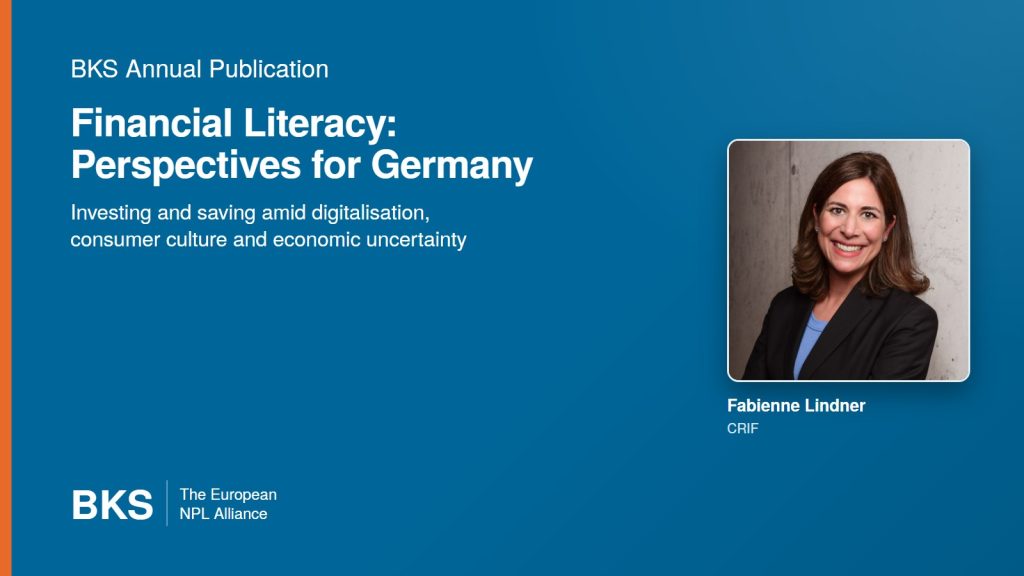
Investing and saving amid digitalisation, consumer culture and economic uncertainty
By Fabienne Lindner
The environment in which financial decisions are made has changed profoundly: digitalisation, new consumption and credit models, the democratisation of access to the capital markets, and macroeconomic shocks have markedly raised the demands on people’s financial judgement. As digitalisation has pushed more decisions onto the individual, financial responsibility has grown ever more personal, while at the same time complexity has grown. Against this backdrop, financial literacy takes on new significance: it should not only help to maximise returns, but at the same time make it possible to deal with uncertainty, volatility, scams and conflicting incentives. Financial literacy thus becomes a key competence of modern societies, comparable to civic education or media literacy.
In public debate, financial literacy is frequently described as an individual ability. The widely held assumption is that those who are financially literate make better decisions, save with foresight, take on less debt and invest rationally. This view, however, falls short. Financial literacy is not a private supplementary qualification; rather, it structures how people process uncertainty, assess risks and plan for the future. In modern economies it is closely bound up with questions of social participation, economic stability and political legitimacy.
The approach taken by Annamaria Lusardi, whose work has decisively shaped international research on financial literacy, even understands financial literacy as an independent form of human capital. What is meant is not merely knowledge of individual financial products, but the ability to recognise economic interrelationships, to process information and to coordinate decisions over longer periods of time. At the heart of this lie basic concepts such as inflation, compound interest and risk diversification. Empirical studies show that even this basic knowledge is far from widespread in many countries, for financial literacy does not arise automatically from general schooling or professional experience — areas in which the subject is often underrepresented. It requires deliberate learning, repetition and application. Without institutional anchoring, the knowledge remains fragmentary and unequally distributed across society.
More recent work also emphasises that financial literacy cannot be considered in isolation from psychological and social factors. People do not make financial decisions as purely rational actors. Time preferences, loss aversion, social norms and emotional reactions systematically influence their behaviour. These influences should not, however, be eliminated, but recognised and reflected upon. Particularly relevant is the finding that financial literacy fulfils a different function under conditions of uncertainty than it does in stable environments: in times of low inflation and clear institutional guardrails, poor financial decisions could often be corrected or compensated for. Where volatility is high and responsibility is individual, by contrast, the costs of poor decisions increase. Financial literacy thus becomes a protective factor, not a guarantee of success.
Financial Literacy in Germany
Germany occupies an ambivalent position in international comparison. On the one hand, many people possess basic financial routines such as saving, budgeting or the use of conventional banking products for investing. Saving traditionally enjoyed a high cultural standing, while indebtedness was long regarded with scepticism and tended to be socially frowned upon. Although Germans generally handle their finances well in everyday life, empirical studies reveal clear deficits when it comes to understanding more complex financial interrelationships.
Inflation, real returns and long-term risk assessments in particular are frequently misjudged. Many households orient themselves towards nominal figures and underestimate the creeping effect of the loss of purchasing power. At the same time, many overestimate their own financial competence. This discrepancy between self-assessment and actual knowledge is pronounced in Germany and has a measurable influence on decision-making behaviour.
In addition, there is a marked social inequality in the distribution of financial literacy: income, formal level of education, gender and migration background correlate significantly with financial knowledge. These differences intensify over the course of a lifetime. Those who had early access to financial education and positive role models build wealth and accumulate experience. Those who make poor decisions early on, or who have to avoid risk, remain disadvantaged in the long term. Studies also show that financial decisions are strongly embedded in social context. Networks, family influences and implicit norms shape risk perception and the willingness to invest.
That many Germans have difficulties with financial matters may also be due to the institutional fragmentation of education in the Federal Republic: responsibilities are distributed across the federal structure, curricula are inconsistent, and binding standards are lacking. Financial topics are often treated as a side issue in schools, hinging on the commitment of individual teachers. Extracurricular provision is diverse, but uncoordinated.
Successful international examples show that sustainable education requires clear responsibilities, long-term funding and systematic evaluation. Financial education should therefore begin early, be repeated and be designed to suit different stages of life. It must not be reduced to one-off interventions such as project weeks at school. At the same time, education policy must give greater consideration to digital realities. Young people acquire financial knowledge primarily informally, via social media and digital platforms. Any approach that aims to stay current should embrace these channels rather than ignore them. Critical thinking, the evaluation of sources and an understanding of how algorithms work thus become central learning objectives.
Yet at the same time it is problematic when financial literacy is presented as a panacea. Education can provide guidance, but it does not replace regulation. Complex markets therefore require protective mechanisms such as transparency obligations, consumer protection and clear liability rules. Those who are financially literate can make use of these protective mechanisms, evaluate offers, assess risks and make informed decisions. Responsibility thus lies both with the state and with the market. Financial education is no substitute for regulation, but its necessary complement.
A Lack of Guidance
The digitalisation of the financial sector has brought about profound structural change over the past ten years. Online banks, neo-brokers and fintech platforms have lowered barriers to entry, accelerated processes and reduced costs. Securities trading, which was once associated with high fees, minimum volumes and personal advice, is today possible via smartphone: fast, simple, digital and in some cases (almost) free of charge.
This development is frequently described as the democratisation of investing. Access to the capital markets is more open than ever before. Conventional bank advice is fading, and standardised digital interfaces are replacing personal interaction. As a result, responsibility for decision-making and risk has shifted markedly onto the individual. On the one hand, digital offerings open up opportunities for learning and participation. On the other hand, the cognitive demands rise. Users must make decisions more quickly, evaluate information themselves and distinguish between numerous products. Without sufficient guidance, easy access can lead to systematically poor decisions.
At the same time, the opening up of the financial markets has given rise to a massive oversupply of information: comparison portals, apps, social media, newsletters and algorithmic recommendations compete for attention. For many people, this abundance of information does not lead to better understanding but instead leaves them overwhelmed. Psychological research shows that the quality of decisions can be impaired by having too many options. Decisions are then either postponed or made on the basis of simplified heuristics. In both cases, the likelihood of consistent long-term strategies diminishes. Financial literacy therefore has to do more than impart knowledge; it must also help people filter information and set priorities realistically in line with their own life situation. In Germany, coherent sources of guidance have so far been lacking: while state educational provision is fragmented, investors often have little confidence that financial institutions impart knowledge neutrally, and digital platforms optimise for user activity, not for long-term benefit. Financial education therefore often takes place in an unplanned, selective and reactive manner.
A central field in which these dynamics manifest themselves is consumption. New payment and credit models have changed the temporal structure of consumption decisions. This becomes particularly apparent with offerings such as “buy now, pay later”. They decouple purchase and payment, lower psychological inhibition thresholds and push budget limits into the future. Empirical findings from the CRIF study “Banking on Banks 2024” show that many users do not perceive these models as credit. The consequences of cumulative obligations are underestimated, especially when several providers are used in parallel.
At the same time, a seeming contradiction emerges between anxiety and the appetite for consumption. The CRIF data document a great fear of inflation and the loss of purchasing power. Nonetheless, discount promotions such as Black Friday record exceptionally high activity. On such days, credit enquiries are more than twice as high as on an average Friday. This points to a shift in time preferences. When the future is perceived as uncertain, consumption in the present matters more. Financial literacy can therefore not rely on abstinence or rationality alone, but must explain how short-term decisions affect long-term room for manoeuvre.
Subjective Perception
Inflation is not only a macroeconomic phenomenon, but an everyday, practical experience. The CRIF study “Banking on Banks 2025” shows that fears of inflation persist even when rates are falling. Households orient themselves towards the prices they perceive regularly, in particular for housing, energy and food. This subjective inflation influences saving and consumption decisions more strongly than official statistics do. Many people respond to this with changes in behaviour that are economically double-edged. On the one hand, people grow keener to spend before money loses more value — a tendency social media amplifies. On the other hand, the fear of being financially overstretched grows.
A central indicator of the effectiveness of financial literacy is not only behaviour in stable times, but how crises are handled. The growing financial fragility across broad swathes of the population therefore matters all the more. Fragility here does not necessarily mean over-indebtedness, but rather the limited ability to cushion unexpected financial shocks. Even smaller losses of income or price increases can put households in difficulty. Accordingly, concerns about solvency, inflation and rising living costs have also increased markedly in Germany. At the same time, a rise in personal insolvencies can be observed that cannot be explained by individual misconduct alone. Rather, structural changes, precarious careers, rising housing costs and flexible credit offers run up against limited financial buffers. Education cannot dissolve these risks; at most it can enable them to be recognised earlier. Those who build up reserves, assess credit costs rationally and keep an overview of their obligations have greater room for manoeuvre. What is decisive here is less the maximisation of knowledge than the development of realistic expectations. Financial literacy here works preventively, not reactively.
Beyond this, studies show that investors respond strongly to social signals. Recommendations from one’s circle of friends, rankings in apps or media attention have a measurable influence on decisions. These effects are particularly strong among inexperienced market participants. Financial education must therefore go beyond conventional teaching content. It is necessary to explain how social dynamics influence markets and how one’s own decisions can be distorted as a result. Neo-brokers reinforce these effects through gamification, push notifications and simplified visualisations. Yet these increase activity, not necessarily understanding. Short-term action is rewarded; long-term planning recedes into the background. For many users, the illusion of control arises, while the actual risks are underestimated. The following therefore holds true: long-term oriented investing remains central to wealth accumulation and retirement provision. Accordingly, patience, diversification and realism have to hold their own against the scramble for attention.
With retirement provision, many of the challenges described come together. The subject requires long-term planning, the handling of uncertainty and an understanding of complex institutional arrangements. In Germany, the statutory pension and social-insurance systems are under pressure from demographic change, while occupational and private provision are becoming more important. Many people, however, underestimate how much they will need, and inflation, longevity risks and real returns are not sufficiently taken into account. Added to this is a complex provision landscape in which products are difficult to compare and incentives are in part contradictory. Moreover, provision decisions often fall in stages of life with limited resources. Young adults face decisions about training and careers, starting a family and housing costs. Here it can help to set priorities, but education cannot resolve all conflicting objectives either.
Finfluencers and the Gender Gap
Against this backdrop, finfluencers are gaining ground. They convey financial topics via social media — often in an accessible, emotional and highly personalised way. For many young people they are the first source of financial information — sometimes the only one, and a trusted one. Young people identify with them. Finfluencers show up where financial institutions either say little or fail to speak to people as equals. In this way they close a gap that formal education has left open. This development is ambivalent. On the one hand, finfluencers help to remove the taboo around money matters and speak about saving, investing and debt in a language that is understood. On the other hand, a systematic contextualisation is often lacking. Topics are in part simplified, risks played down, successes personalised. It is also worth asking what motives these social-media players actually have and how neutral the content really is. Yet finfluencers are less a cause than a symptom of an institutional deficit. Their reach points to the need for guidance. Beyond this, they also deserve credit for breaking the taboo around money — something financial-literacy policy ought to acknowledge. Rather than criticising informal actors across the board, the task is to define standards, promote transparency and strengthen critical skills — in a word, media literacy.
A particularly persistent pattern in research on financial literacy is gender-specific differences. Women regularly perform worse than men in tests of financial knowledge. At the same time, they display a more realistic self-assessment. Men tend more strongly to overestimate their competences, which can lead to riskier behaviour. The causes of these differences are structurally conditioned: on average, women have lower incomes, interrupted careers and less access to financial networks. The gender gap is particularly severe in retirement provision. Women are affected by old-age poverty to an above-average extent. Financial education that ignores these structural risks and tackles only individual behaviour does not go far enough. Effective approaches must be linked with labour-market and social-policy measures. For this reason, the theme of female finance has taken shape in recent years, geared to the lived realities of women — realities that differ sharply from men’s because of parental leave and part-time work. Is it needed? The response speaks for itself: as long as it makes women feel spoken to and prompts them to take charge of their money, that is the best proof of a real need.
Summary and Outlook
Financial literacy in 2026 is caught between freedom and overload. The financial markets are more accessible than ever before; guidance is more difficult than ever. Consumption and caution, willingness to invest and fear of losses exist side by side. The CRIF studies clearly show this ambivalence: great concern about inflation alongside high consumption activity, rising fragility alongside growing market participation. Financial education has to live with these contradictions rather than moralise them away or smooth them over. The task is to make decision-making spaces visible, to present consequences in a comprehensible way and to strengthen the capacity for judgement — the precondition for genuine economic self-determination. This stabilises modern economies, strengthens resilience, reduces systemic risks and promotes social participation.
The educational landscape in Germany is characterised by opportunities and challenges: digitalisation, neo-brokers, finfluencers and innovative credit models increase participation and lower barriers to entry. At the same time, cognitive demands, decision-making stress and social inequality rise. These dynamics must be recognised and conveyed analytically, in order thereby to strengthen the capacity to act. Retirement provision, the gender gap, wealth inequality and individual fragility are core fields in which financial literacy can be particularly effective, but where structural limits also become clear. It can provide guidance, enable the recognition of risk and broaden room for manoeuvre, yet it can neither replace institutional protective mechanisms nor compensate for macroeconomic risks.
For politics, academia and civil society, the task is to anchor financial literacy in the long term. To this end, the content must be conceived in a way that spans generations, is specific to stages of life and is integrative. Financial literacy is thus not an isolated learning objective, but part of a comprehensive societal arrangement. In this way, cognitive abilities, social background and the institutional framework are brought together. Financial literacy is indispensable if the capacity to act, the power of judgement and social responsibility are to be ensured in a dynamic, digital and uncertain financial world.

Fabienne Lindner has devoted herself to financial literacy for over a decade and, as a speaker and author, motivates private investors to engage with their finances and with capital-market-backed retirement provision. For her commitment she has been honoured, among other things, with the Finfluencer Award 2025 as well as the Media Prize of the Stiftung Finanzbildung (Foundation for Financial Literacy) for her book “Investieren mit Weitblick” (“Investing with Foresight”). At the credit-reference agency CRIF, she supports financial companies in implementing risk, fraud and compliance solutions.
This article first appeared in German in the BKS Annual Publication 2026.
Newsletter
Credit Risk Monitor
Market data, policy developments and Alliance news – a few times a year, straight to your inbox.